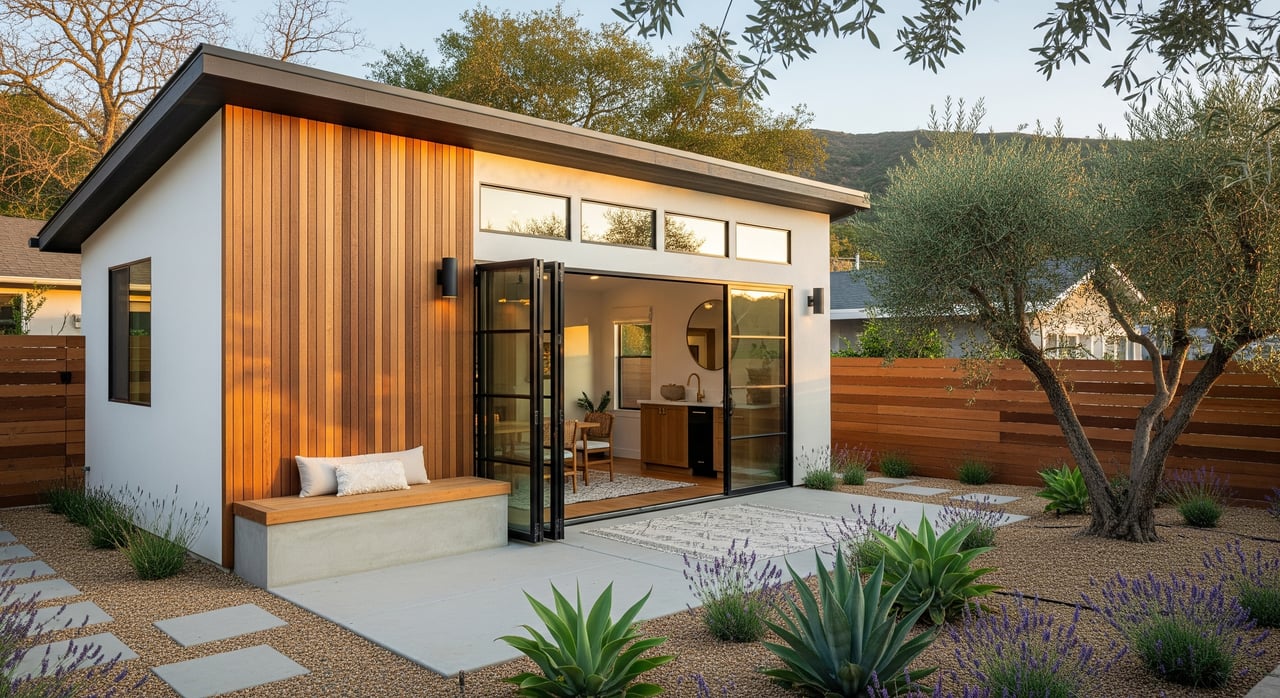
Thinking about turning your Chatsworth backyard into steady monthly income? An accessory dwelling unit, or ADU, can add living space and long-term value while opening a path to rental revenue. If you want clear, local insight on what is allowed in the City of Los Angeles, what it costs, and how to gauge rent and ROI in Chatsworth, you are in the right place. You will find practical steps, a feasibility checklist, and risk tips to help you move forward with confidence. Let’s dive in.
ADU basics in Los Angeles
An ADU is a self-contained residential unit on the same lot as an existing home. Common types include a detached ADU, an attached ADU, and a junior ADU (JADU) created inside the main home. Many jurisdictions allow detached ADUs up to about 1,200 square feet, with attached units often smaller, and JADUs typically up to 500 square feet. Exact limits, height, and floor area are set by the City of Los Angeles, so confirm parcel-specific rules with City Planning.
Most single-family lots can have at least one ADU, and in some situations an ADU plus a JADU may be possible. Reduced setbacks often apply to ADUs compared to the main house, but height, floor area ratio, and lot coverage still matter. Short-term rental rules in Los Angeles are strict, so many owners choose long-term leasing to keep compliance simple.
Chatsworth site factors that matter
Chatsworth spans flat valley-floor neighborhoods and hillside areas near the Santa Susana Mountains. Lot sizes vary from standard suburban parcels to larger equestrian-style properties. These differences make ADU feasibility and cost highly site-specific.
Key site features to review:
- Lot size and layout. Smaller 5,000 to 7,000 square foot lots limit detached footprints. Larger or irregular lots can unlock better placement options.
- Access and parking. Long or shared driveways are common. A separate entrance and safe pedestrian access improve renter appeal and may be needed for a true independent unit.
- Alleys. Some streets lack alleys, which affects siting and utility runs. Without alley access, on-site placement and driveway adjustments may be necessary.
- Topography and geology. Hillside or sloped lots often require grading, retaining, engineered foundations, and possible geotechnical reports, which can add cost and time.
- Fire hazard zones. Portions of Chatsworth fall within urban-wildland interface areas. You may need ignition-resistant materials, defensible space, or sprinklers based on local fire mapping.
- Utilities. LADWP and LA Sanitation must approve water and sewer connections. Capacity checks and meter upgrades can increase cost.
- Overlays and reviews. Historic districts, hillside review, or specific plan overlays can add design constraints and review steps.
Quick feasibility checklist
- Verify zoning and ADU allowances with the City of Los Angeles Department of City Planning.
- Confirm lot size, existing building footprint, and locations for water and sewer laterals.
- Identify slope, retaining walls, and construction equipment access routes.
- Check fire severity maps for defensible-space and materials requirements.
- Review parking restrictions, easements, and right-of-way issues.
- Note whether there is alley access or a shared driveway. If applicable, review any HOA or private street rules.
Parking, setbacks, and height
State law limits how much parking a city can require for ADUs, especially if your lot is near transit or in certain districts. The City of Los Angeles follows these limits, although parking may still be required in some cases if exemptions do not apply. Setbacks are often reduced for ADUs, which helps on smaller lots, but height, floor area ratio, and lot coverage can constrain design. Confirm all standards for your address during early planning.
Permits and timelines in LA
Most ADUs that meet standards are approved ministerially, which avoids discretionary hearings. Plan check and permits can still take weeks to months depending on completeness, utilities, and site conditions. Hillside parcels, grading, and utility upgrades can add review time.
Typical steps:
- Preliminary feasibility and zoning confirmation with City Planning.
- Site survey and soils or geotechnical reports, if required.
- Schematic design and contractor estimates.
- Full construction drawings and engineering.
- Submittal to LADBS and related agencies for plan check approvals.
- Permit issuance and inspections during construction.
- Final inspection and certificate of occupancy.
Timing often ranges several months for straightforward projects, with total design and build timelines around 6 to 12 months for simple sites. Complex conditions can extend total duration to 12 to 24 months or more.
Costs and financing options
Total cost depends on size, type, finishes, utilities, and site complexity. Small interior conversions tend to cost less than ground-up detached units. Southern California ADU construction ranges run from the mid five figures to several hundred thousand dollars for detached units with mid to high-end finishes. Soft costs for design, engineering, permits, utility hookups, and inspections often add 10 to 25 percent or more of hard costs. Sewer or water lateral work and meter upgrades can add several thousand to tens of thousands of dollars.
Common financing paths include cash or savings, a HELOC or home equity loan, a cash-out refinance, a construction loan, or ADU-specific products from local lenders. Some lenders recognize projected ADU rent in underwriting. Compare terms and carrying costs to choose the best fit for your budget and timeline.
How to model ROI
Build a simple model before you spend on design:
- Total project cost, including contingency and soft costs
- Monthly market rent estimate for the final unit type
- Vacancy rate assumption, such as 5 to 10 percent
- Operating expenses, utilities, insurance, maintenance, and management
- Financing costs, interest and fees
- Annual property tax increase for the new construction
- Target holding period, cash-on-cash, or IRR goals
Rental potential in Chatsworth
Rental demand depends on unit size, layout, privacy, and parking. Larger units command higher gross rent, although they can cost more to build per square foot. Modern kitchens and baths, in-unit laundry, and efficient HVAC raise appeal and reduce vacancy. Private outdoor space, a separate entrance, and on-site parking help units lease faster in Chatsworth’s car-oriented setting.
Short-term rentals can produce higher nightly rates, but Los Angeles policy is strict and often tied to primary residence and registration. Many owners choose long-term leasing of 12 months or more for simpler compliance and steadier cash flow. Price rent using current local comps from sources like MLS, Zumper, or RentCafe, then refine with input from a property manager.
Design choices that boost rent
- Create privacy. Plan a separate entry path and visual screening from the main home.
- Add storage. Include closets, kitchen cabinetry, and outdoor storage where possible.
- Make parking easy. If feasible, designate a parking space or improve driveway access.
- Prioritize durability. Use resilient flooring, quality fixtures, and energy-efficient systems to reduce maintenance and utilities.
- Metering and utilities. Separate metering where possible or install sub-meters to simplify billing.
Risks to plan for
- Site surprises. Unknown soils, buried utilities, or slope issues can add cost. Order surveys and geotechnical work early if indicated.
- Rule changes. ADU laws evolve, so confirm current standards before submitting plans.
- HOA or private restrictions. CC&Rs can limit ADUs even when city rules allow them.
- Vacancy and management. Budget for turnover, screening, and potential management fees.
- Taxes. New construction is typically assessed for the added portion. Consult the L.A. County Assessor and your CPA.
Your next steps
- Pull parcel zoning, overlays, and lot details through City Planning resources or ZIMAS.
- Order a site survey and locate water, sewer, and electrical services.
- Request a parcel-specific ADU options memo that compares a conversion, an attached unit, and a detached unit.
- Get at least two contractor bids, itemized for hard and soft costs, including utility connections and allowances for unknowns.
- Speak with a lender about financing and a CPA about tax and rent implications.
- Build a conservative ROI model, then adjust scope or finishes to hit your target returns.
Ready to validate your plan or compare ADU options in Chatsworth? Connect with a local advisor who can coordinate designers, lenders, and property managers, and provide current rent comps. Schedule a Confidential Market Consultation with Rodney Johnson II to get a tailored, property-specific plan.
FAQs
What size ADU can I build in Chatsworth, Los Angeles?
- Many jurisdictions allow detached ADUs up to about 1,200 square feet, with JADUs typically up to 500 square feet, but you should confirm exact size, height, and floor area limits with the City of Los Angeles for your parcel.
Do I need to provide parking for an ADU in Chatsworth?
- It depends on your location and exemptions. State rules limit parking requirements for ADUs, and Los Angeles follows those limits, especially near transit, but verify the standard for your exact address.
How long do ADU permits and construction take in LA?
- Ministerial ADUs can clear plan check in several months if plans are complete, with total design and build timelines often 6 to 12 months for simple sites and 12 to 24 months or more for complex conditions.
Can I rent my ADU short term in Los Angeles?
- Los Angeles has strict short-term rental rules that emphasize registration and primary residence criteria. Many owners choose long-term leases for simpler compliance and steadier income.
How will adding an ADU affect my property taxes?
- New construction is typically assessed for the added portion of value, which increases annual taxes by that amount. Review guidance from the L.A. County Assessor and consult your CPA.
What are typical ADU cost drivers I should plan for?
- Size and type of unit, site conditions like slope or retaining walls, utility upgrades, finishes, soft costs for design and permits, and financing costs all influence total budget and ROI.