If you are trying to choose between a newer neighborhood and an established one in Valencia, you are not just comparing home age. You are comparing two different ways of living, maintaining a property, and using community amenities. The good news is that Valencia gives you both, and understanding the tradeoffs can help you buy with more confidence. Let’s dive in.
Valencia Spans Multiple Eras
Valencia is especially interesting because it was planned across decades, not built all at once. The community began as a 15,000-acre new town in 1965, and the first home in Old Orchard I closed escrow in 1967.
That long timeline means Valencia includes both early village-style neighborhoods and newer master-planned sections. Instead of one consistent housing style, you will find a mix of older tracts, mature HOA communities, and current new-construction offerings.
Newer Valencia Neighborhoods
Newer Valencia is represented most clearly by the current FivePoint Valencia buildout. These sections are being sold by multiple builders and include paired homes, duplex homes, townhomes, detached homes, and larger estate-style options.
Many current floor plans fall around 1,800 to 2,500 square feet with 3 to 4 bedrooms and 2- to 3-car garages. Compared with many older tracts, the product mix tends to feel more standardized and compact.
Amenities Are More Centralized
One of the biggest differences in newer Valencia is the amenity structure. The HOA setup is more centralized, with one master HOA and, in some cases, additional sub-association fees.
These newer sections may include private parks, pools, clubhouse space, greenways, bike paths, NEV paths, resident clubs, and professionally managed common areas. For many buyers, that creates a more curated, amenity-driven experience with less responsibility for shared-space upkeep.
Design Feels More Planned
Newer Valencia is still being shaped by a long-term master plan. FivePoint states that roughly 10,000 acres are permanently protected open space, and the community is organized around parks, trails, and gathering spaces.
For you as a buyer, that often means a neighborhood experience built around connected outdoor areas and consistent design standards. It can also mean less variation from home to home, especially on the exterior.
Established Valencia Neighborhoods
Established Valencia covers a wider range than many buyers expect. Old Orchard is the clearest historic example because it was Valencia’s first residential village, but even older neighborhoods are not all the same.
Some established sections have no HOA at all, while others still offer legacy HOA amenities with relatively modest dues. That is why it helps to compare specific tracts instead of assuming every older neighborhood works the same way.
Older Homes Can Offer More Lot Space
Old Orchard examples show why established neighborhoods still appeal to many buyers. Current examples have included single-story homes on lots of 6,272 square feet and 7,329 square feet, with some listings noting no HOA and no Mello-Roos.
Historic Valencia materials also described detached patio homes with generous rear yards and sideyard patios. If you want more outdoor space or a less uniform streetscape, established neighborhoods may offer options that are harder to find in newer communities.
HOA Structure Varies More
Established Valencia is not simply “older homes with no amenities.” Some older neighborhoods do have HOA features, and the setup can look very different from one section to another.
For example, Old Orchard II has been shown with a clubhouse, playground, pool, spa, and dues around $78 per month. Valencia Summit shows another version of established Valencia, with a mature HOA structure and online access for maintenance requests, architectural applications, and account information.
The Biggest Differences for Buyers
When you compare newer and established neighborhoods in Valencia, the decision usually comes down to lifestyle, maintenance, fees, and lot preferences. Neither is automatically better. The right fit depends on what matters most to you.
Maintenance Responsibilities
In newer Valencia, more upkeep tends to be handled through the HOA and the community’s standardized design. Shared areas, parks, and certain amenities are professionally maintained, which can reduce some of the day-to-day burden on individual owners.
In established Valencia, the picture is more varied. You may have more control over your property, but you may also need to budget for aging systems, exterior updates, landscaping, or improvements that have already been handled in a newer home.
Amenities and Shared Spaces
If amenities matter to you, newer Valencia often has the edge in quantity and coordination. Current materials highlight multiple private parks, pools, a clubhouse, greenways, and resident clubs.
Established neighborhoods can still offer recreation features, but those amenities may be older, more limited, or tied to smaller HOA structures. In some older sections, you may trade a larger lot or lower dues for fewer shared extras.
Fees and Cost Structure
Cost is not just about the purchase price. It is also about monthly ownership costs and what those costs include.
Newer Valencia may involve a master HOA and possibly sub-association fees. Established neighborhoods may have no HOA, lower HOA dues, or a legacy HOA with fewer layers. For some buyers, that difference is a major deciding factor.
Home Style and Flexibility
Newer communities often appeal to buyers who want a turnkey feel and more predictable layouts. If you prefer a home that is newer, more standardized, and designed around current amenities, a newer neighborhood may feel easier.
Established neighborhoods often bring more variation in architecture, lot layout, and yard size. If you like the idea of personalizing a home over time or want a property with more outdoor room, an older neighborhood may be a better match.
What This Means for Value
The value question is not really newer versus older. It is newer and easier versus older and potentially more flexible.
Current FivePoint Valencia pricing ranges from the upper $500,000s to the $1.8 million range. At the same time, established Old Orchard examples show that some older homes may offer no HOA or lower monthly dues, along with larger lots.
That means your version of value depends on what you prioritize. If you want shared amenities, lower exterior maintenance, and a more uniform environment, newer Valencia may justify the tradeoff. If you want more lot space, fewer fees, or room to customize, established Valencia may offer stronger long-term appeal for your goals.
Why HOA Documents Matter
When you compare homes in Valencia, HOA due diligence is especially important. Under California Civil Code 4525, sellers must provide key HOA documents before transfer, including governing documents, assessment information, notices of unresolved violations, and certain board materials.
That matters because two homes in Valencia can look similar online but come with very different ownership rules and monthly costs. In newer communities, you may be reviewing both a master HOA and a sub-association. In established neighborhoods, you may find no HOA at all or a smaller, older association with a very different structure.
Before you move forward, it helps to understand what the HOA actually covers, what approvals may be required, and whether there are any outstanding issues that could affect your plans.
How to Decide Which Fits You
A simple way to narrow your choice is to think about your daily life, not just the home itself. Ask yourself whether you care more about convenience and amenities or space and flexibility.
A newer Valencia neighborhood may be a strong fit if you want:
- A more turnkey home
- Access to private parks, pools, and clubhouse spaces
- Professionally maintained common areas
- A more consistent neighborhood design
An established Valencia neighborhood may be a better fit if you want:
- A larger lot or more usable yard space
- Lower HOA dues or no HOA in some cases
- More variation in home styles and layouts
- Greater ability to update and personalize over time
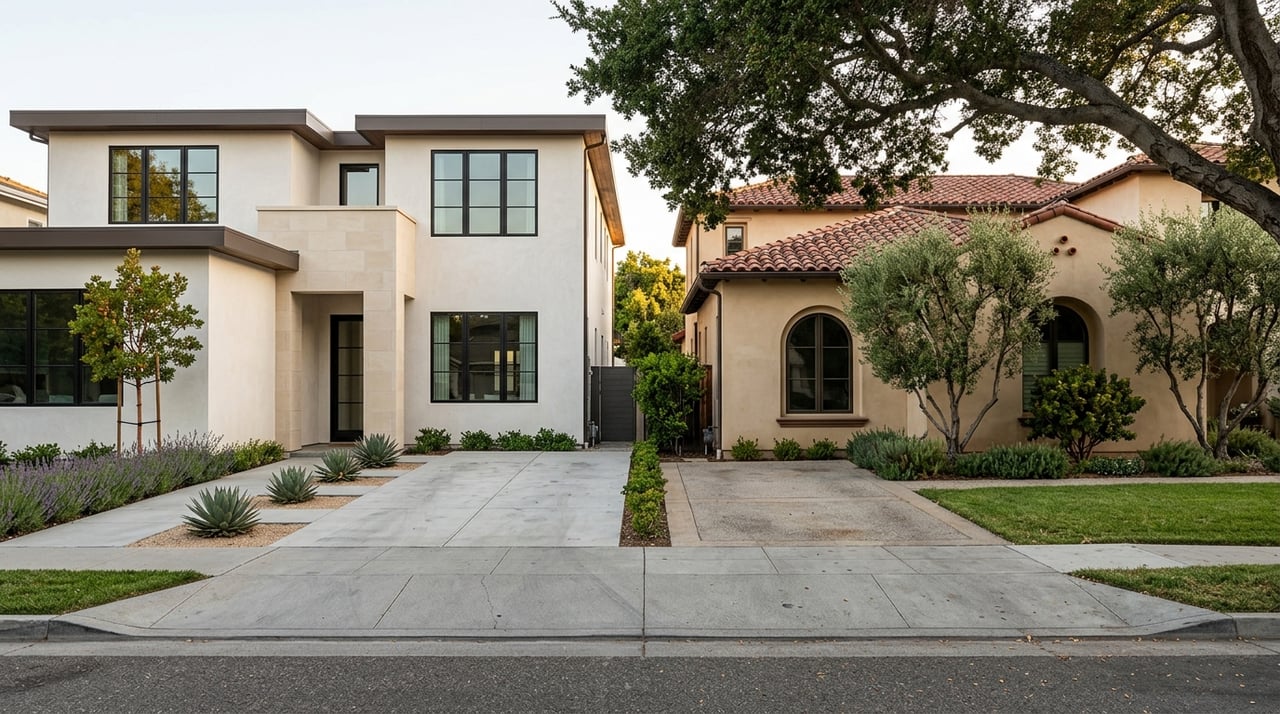
The best choice often becomes clear when you tour both side by side. Once you see the difference in lot size, street feel, amenities, and upkeep expectations, your priorities usually come into focus quickly.
If you are weighing newer versus established neighborhoods in Valencia, the right guidance can save you time and help you focus on the tradeoffs that matter most. For a personalized strategy based on your goals, connect with Rodney Johnson II.
FAQs
Are there Valencia neighborhoods with no HOA?
- Yes. Some established areas, including examples in Old Orchard III, have been marketed with no HOA, while newer Valencia communities may have a master HOA and sub-association fees.
Do newer Valencia neighborhoods have more amenities?
- Yes. Current newer Valencia materials highlight private parks, pools, clubhouse space, greenways, bike paths, NEV paths, and resident clubs.
Do established Valencia neighborhoods usually have larger lots?
- Often, yes. Old Orchard examples have shown lots over 6,000 square feet, and historic materials describe rear yards and sideyard patios in early Valencia neighborhoods.
Does neighborhood age affect home maintenance in Valencia?
- Yes. Older homes usually bring more variation in condition and may require more budgeting for updates, while newer communities often shift more upkeep to HOA-managed common areas.
What should buyers review for Valencia HOA communities?
- Buyers should review the HOA documents provided during the transaction, including governing documents, assessment information, and any notices of unresolved violations required under California law.
Is newer or established Valencia better for buyers?
- Neither is universally better. Newer neighborhoods may suit buyers who want amenities and a more turnkey feel, while established neighborhoods may suit buyers who want larger lots, lower dues, or more flexibility.